





RO Tank Not Filling – Causes, Troubleshooting & Solutions (2026 Guide)

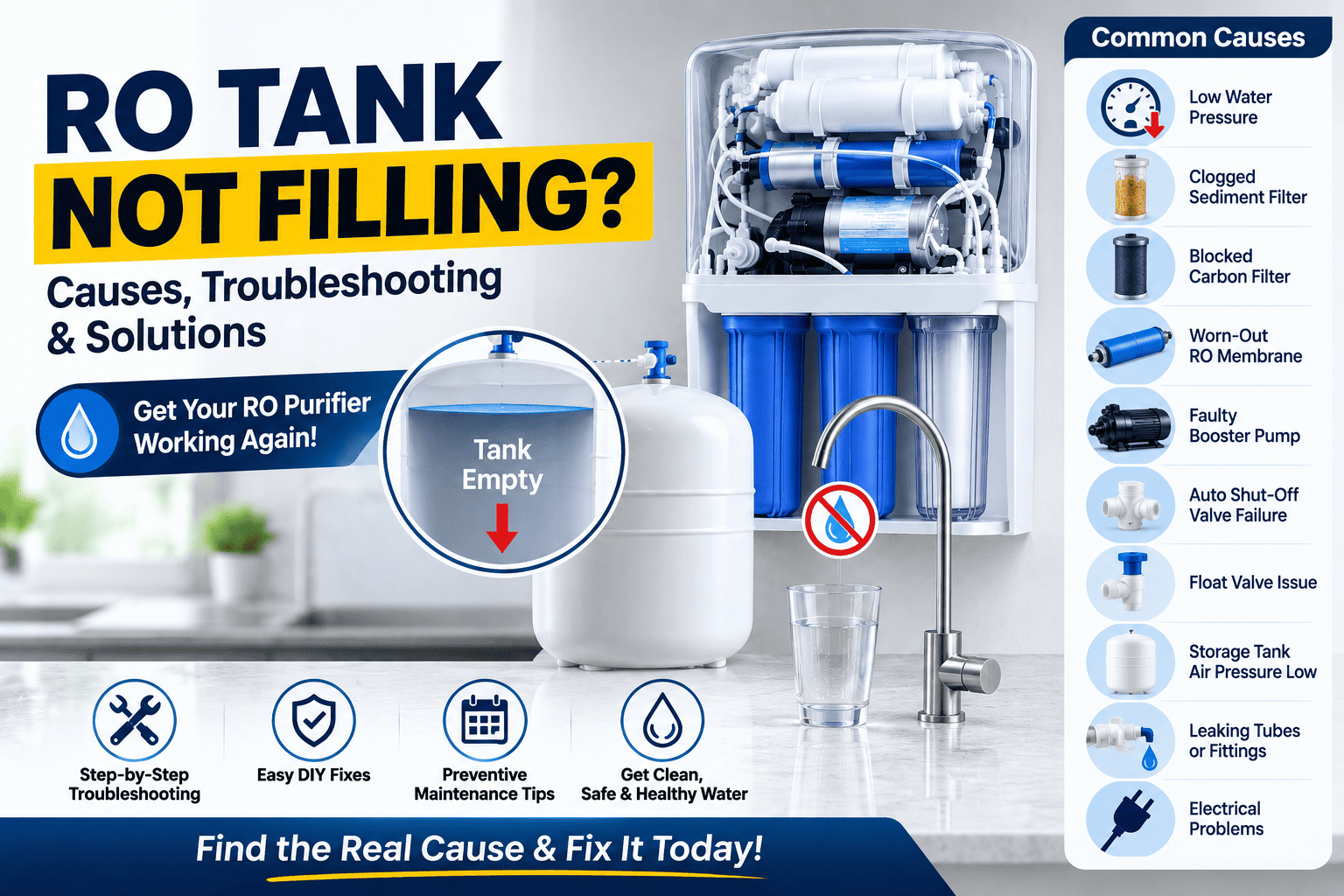
RO Tank Not Filling? Here’s How to Fix It
If your RO water purifier is running but the storage tank isn’t filling, don’t panic. This is one of the most common issues faced by RO users and is often caused by clogged filters, low water pressure, or a worn-out RO membrane.
This guide explains the possible causes, how to diagnose the issue, and the best solutions to get your purifier working again.
Common Symptoms
- Storage tank stays empty.
- Water comes out very slowly.
- Motor runs continuously.
- RO system takes many hours to fill the tank.
- Little or no water from the faucet.
- Waste water keeps flowing.
10 Common Reasons Why an RO Tank Is Not Filling
1. Low Inlet Water Pressure
RO purifiers require adequate water pressure to push water through the membrane.
Solution:
- Check the main water supply.
- Ensure the inlet valve is fully open.
- Install or replace the booster pump if pressure is consistently low.
2. Clogged Sediment Filter
A blocked sediment filter restricts water flow into the purifier.
Solution:
Replace the sediment filter if it has not been changed in the recommended maintenance interval.
3. Blocked Carbon Filter
A clogged carbon filter reduces water flow and slows tank filling.
Solution:
Replace the carbon filter with a compatible replacement cartridge.
4. Worn-Out RO Membrane
An old or clogged membrane produces less purified water.
Symptoms
- Slow purification
- Increased TDS
- Tank never fills completely
Solution
Replace the membrane if it has reached the end of its service life.
5. Faulty Booster Pump
Without sufficient pressure, the membrane cannot produce purified water efficiently.
Solution
Inspect the pump, electrical connections, and SMPS. Replace the pump if necessary.
6. Auto Shut-Off Valve Failure
A faulty shut-off valve may stop water production even when the tank is empty.
Solution
Test and replace the valve if defective.
7. Solenoid Valve Problem
The solenoid valve controls water entering the purifier.
Solution
A technician can inspect and replace the valve if it is malfunctioning.
8. Storage Tank Air Pressure Is Incorrect
The internal air bladder may lose pressure over time.
Solution
Check the tank pressure according to the manufacturer’s recommendations. Replace the tank if it no longer maintains pressure.
9. Leaking Tubes or Fittings
Small leaks reduce system pressure and slow tank filling.
Solution
Inspect tubing and fittings for leaks and replace damaged components.
10. Electrical Issues
Power supply problems can prevent the purifier from operating correctly.
Solution
Check the adapter, SMPS, electrical socket, and wiring.
Step-by-Step Troubleshooting Checklist
- Verify the water supply.
- Confirm the purifier has power.
- Check water pressure.
- Replace overdue sediment and carbon filters.
- Inspect the RO membrane.
- Check the booster pump.
- Test the auto shut-off valve.
- Inspect the solenoid valve.
- Check for leaks.
- Contact a qualified technician if the issue persists.
How to Prevent This Problem
- Replace filters on schedule.
- Service the purifier regularly.
- Monitor inlet water pressure.
- Use genuine replacement parts.
- Check for leaks every few months.
- Test TDS periodically.
Frequently Asked Questions
Why is my RO tank taking so long to fill?
Low water pressure, clogged filters, or a worn-out membrane are the most common reasons.
Can a bad membrane stop the tank from filling?
Yes. A blocked membrane significantly reduces purified water production.
Should the RO motor run continuously?
No. Continuous running usually indicates an underlying issue such as low pressure, filter blockage, or a faulty shut-off valve.
How long should an RO tank take to fill?
Depending on the purifier model and inlet pressure, it typically takes between 1 and 3 hours.
Conclusion
An RO tank that won’t fill is usually caused by reduced water flow or pressure rather than a major system failure. Regular maintenance, timely filter replacements, and periodic inspection of critical components can prevent most issues and keep your purifier operating efficiently.


