






Why Is My RO Water Purifier Leaking? Causes, Troubleshooting & Solutions (2026 Guide)

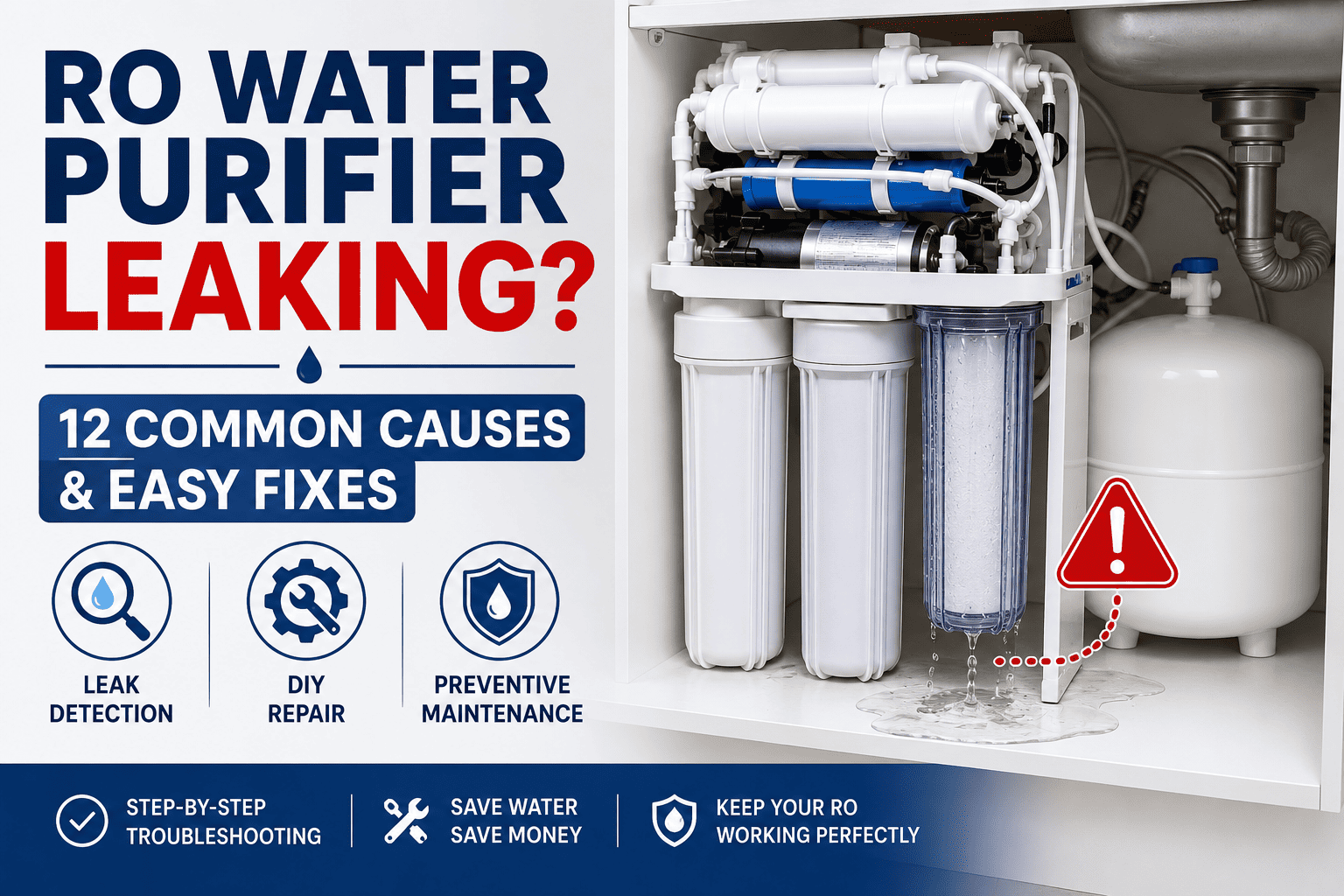
Why Is My RO Water Purifier Leaking?
A leaking RO water purifier is one of the most common household water filtration problems. Even a small leak can waste water, reduce purification performance, damage nearby cabinets, and shorten the life of important components.
The good news is that most leaks are caused by worn seals, loose fittings, clogged filters, or damaged tubing—all of which can usually be identified and fixed.
This guide explains where leaks occur, why they happen, and how to solve them safely.
Common Symptoms
- Water dripping from the purifier
- Water collecting under the cabinet
- Slow leak near the filter housings
- Continuous dripping from the faucet
- Water leaking from tubing connections
- Wet floor around the purifier
- Reduced water pressure
- Motor running more often than usual
12 Common Reasons Your RO Purifier Is Leaking
1. Loose Push-Fit Connectors
RO systems use quick-connect fittings that can become loose over time.
Solution
- Turn off the water supply.
- Remove and reinsert the tubing fully.
- Ensure the locking clip is properly installed.
2. Damaged RO Tubing
Tubes may crack, kink, or become brittle after years of use.
Solution
Replace damaged tubing with food-grade RO tubing of the correct size.
3. Worn O-Rings
O-rings create watertight seals inside filter housings and connectors.
Symptoms
- Dripping around filter housings
- Water leaks after filter replacement
Solution
Inspect, clean, lubricate (with food-grade silicone if recommended), or replace damaged O-rings.
4. Loose Filter Housing
If the filter housing isn’t tightened correctly after maintenance, water may leak.
Solution
Use the housing wrench to tighten the housing securely, avoiding excessive force.
5. Cracked Filter Housing
Plastic housings can crack due to age, impact, or over-tightening.
Solution
Replace the damaged housing immediately.
6. Faulty RO Faucet
Leaks around the faucet may result from worn seals or loose mounting hardware.
Solution
Tighten the fittings and replace worn washers or the faucet if necessary.
7. Storage Tank Valve Leak
The valve connecting the storage tank can develop leaks.
Solution
Inspect the valve and replace it if damaged.
8. Overflow or Float Valve Problem
An incorrectly functioning float valve may cause overflow.
Solution
Adjust or replace the float valve.
9. High Water Pressure
Excessively high inlet pressure places stress on fittings and seals.
Solution
Install a pressure-reducing valve if your water pressure exceeds the purifier manufacturer’s recommended range.
10. Incorrect Filter Installation
Improperly seated cartridges can cause leaks after maintenance.
Solution
Remove and reinstall the filters according to the manufacturer’s instructions.
11. Solenoid Valve or Shut-Off Valve Leak
Internal valve failures can allow water to escape.
Solution
Inspect and replace the faulty valve if required.
12. Aging Components
Rubber seals, plastic fittings, and tubing naturally wear over time.
Solution
Inspect the system annually and replace aging components before they fail.
Step-by-Step Leak Inspection
- Turn off the power supply.
- Close the water inlet valve.
- Dry the purifier completely.
- Turn the water supply back on.
- Observe where the first drop appears.
- Check filter housings.
- Inspect tubing connections.
- Examine the faucet.
- Inspect the storage tank valve.
- Test the purifier after repairs.
How to Prevent RO Water Leaks
- Replace O-rings during scheduled maintenance.
- Change filters on time.
- Avoid over-tightening housings.
- Use only compatible replacement parts.
- Inspect tubing regularly.
- Replace cracked fittings immediately.
- Service the purifier annually.
Frequently Asked Questions
Why is my RO purifier leaking after changing the filters?
The most common causes are a misaligned O-ring, a loose housing, or an incorrectly installed filter cartridge.
Can I continue using a leaking RO purifier?
Small leaks can quickly become larger and may damage furniture or flooring. It’s best to identify and repair the leak as soon as possible.
Which part leaks most often?
Quick-connect fittings, O-rings, filter housings, and tubing are among the most common sources of leaks.
Should I replace the whole purifier?
Usually not. Most leaks can be resolved by replacing inexpensive components rather than the entire system.
Conclusion
Most RO water purifier leaks are straightforward to diagnose and repair. By identifying the source of the leak early, replacing worn seals or fittings, and performing routine maintenance, you can keep your purifier operating efficiently while avoiding unnecessary water damage.
If you’re unsure about the source of the leak or the purifier continues to leak after basic troubleshooting, consult a qualified service technician.


