





Why Is My RO Water Purifier Not Dispensing Water? Causes, Troubleshooting & Solutions (2026 Guide)

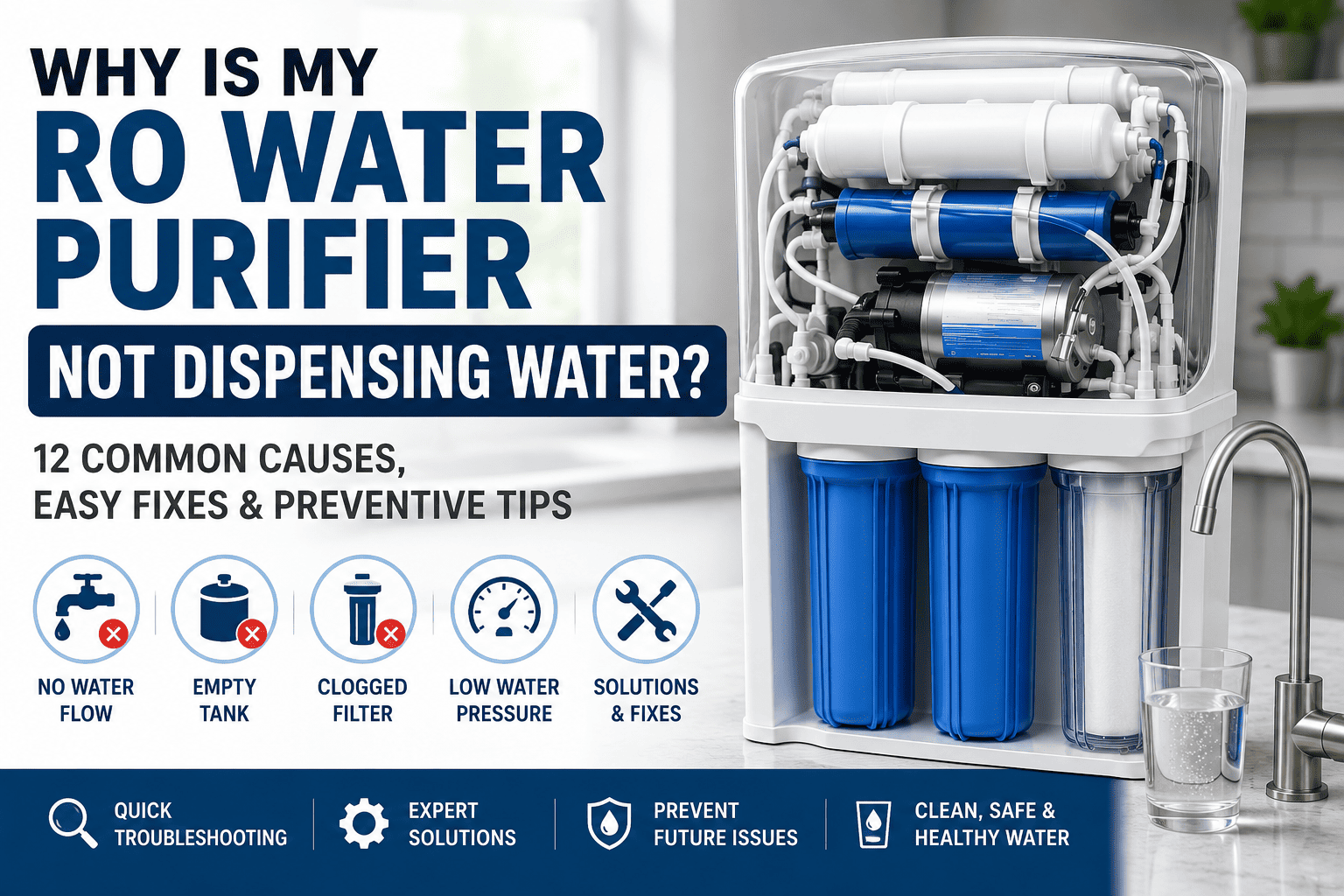
An RO (Reverse Osmosis) water purifier is designed to provide a continuous supply of clean drinking water. If your RO purifier suddenly stops dispensing water, it can be frustrating, but the issue is often caused by a simple problem that can be identified and resolved.
In this guide, we’ll explain the most common reasons why an RO water purifier is not dispensing water, how to diagnose the problem, and the steps you can take to restore normal operation.
Common Symptoms
Your purifier may show one or more of these symptoms:
- No water comes out of the faucet.
- Storage tank remains empty.
- Motor runs continuously.
- Motor does not start.
- Very low water flow.
- Water stops after a few seconds.
- Pump runs but no water reaches the tap.
- System makes unusual noises.
- RO purifier leaks while dispensing.
Each symptom points to a different underlying cause.
12 Common Reasons Your RO Water Purifier Is Not Dispensing Water
1. Empty Storage Tank
The most common reason is that the storage tank hasn’t filled yet.
How to Check
- Gently shake the tank.
- If it feels light, it is empty.
- Allow the purifier enough time to refill.
Solution
Wait until the tank fills completely. Depending on your purifier and water pressure, this may take 30 minutes to several hours.
2. Low Water Pressure
RO systems require adequate inlet water pressure to operate efficiently.
Symptoms
- Slow filling
- Weak water flow
- Tank never fills completely
Solution
- Check your home’s water supply.
- Ensure all inlet valves are fully open.
- If water pressure is consistently low, consider installing a booster pump.
3. Clogged Sediment Filter
Sediment filters trap dirt, sand, and rust. Over time, they become blocked and restrict water flow.
Signs
- Reduced water production
- Pump works harder than usual
- Slow dispensing
Solution
Replace the sediment filter according to the manufacturer’s maintenance schedule, or sooner if your water supply contains a lot of suspended particles.
4. Worn-Out Carbon Filter
A clogged carbon filter can also reduce water flow.
Symptoms
- Low output
- Poor tasting water
- Slow tank filling
Solution
Replace the carbon filter with a compatible replacement cartridge.
5. RO Membrane Is Blocked
The RO membrane is the heart of the purification system.
If it becomes fouled with minerals or contaminants, water production decreases significantly.
Symptoms
- Very slow purification
- High TDS in output water
- Little or no water dispensing
Solution
Test the water quality and replace the membrane if it has reached the end of its service life.
6. Booster Pump Failure
The booster pump increases pressure for effective RO filtration.
Symptoms
- Motor does not run
- Weak pressure
- No water production
Solution
Inspect electrical connections and power supply. If the pump is faulty, replace it with a compatible model.
7. Faulty Solenoid Valve
The solenoid valve controls water flow inside the purifier.
When it fails, water may stop entering the filtration system.
Symptoms
- No water entering the purifier
- Tank remains empty
Solution
A technician can test the valve and replace it if necessary.
8. Auto Shut-Off Valve Malfunction
The auto shut-off valve regulates tank filling.
If it becomes stuck, water production may stop even when the tank is empty.
Solution
Replace the valve if testing confirms it is defective.
9. Air Lock in the System
Air trapped inside the purifier can interrupt water flow.
Solution
Flush the system according to the manufacturer’s instructions or contact a qualified technician.
10. Faulty Storage Tank
The internal bladder of the storage tank can lose pressure over time.
Symptoms
- Tank appears full
- Little or no water comes from the faucet
Solution
Check the tank’s air pressure and replace the tank if it no longer holds pressure.
11. Closed or Blocked Faucet
Sometimes the problem is simply a clogged RO faucet.
Solution
- Inspect the faucet.
- Clean mineral deposits.
- Replace the faucet if damaged.
12. Electrical or Power Problems
If the purifier has no power, it cannot produce purified water.
Check
- Power adapter
- SMPS
- Electrical socket
- Loose wiring
- Fuse (if applicable)
Step-by-Step Troubleshooting Checklist
Before replacing any parts, follow these steps:
- Confirm that your home water supply is working.
- Verify that the purifier has electrical power.
- Check whether the storage tank is empty.
- Inspect all inlet and outlet valves.
- Replace overdue sediment and carbon filters.
- Measure inlet water pressure.
- Test the RO membrane if water production remains low.
- Inspect the booster pump and solenoid valve.
- Check the storage tank pressure.
- Contact a qualified service technician if the issue persists.
When Should You Replace RO Components?
General replacement intervals vary depending on water quality and usage.
| Component | Typical Replacement Interval |
|---|---|
| Sediment Filter | Every 3–6 months |
| Carbon Filter | Every 6–12 months |
| RO Membrane | Every 2–3 years |
| Booster Pump | As needed, based on wear |
| Storage Tank | 5–10 years (or as recommended by the manufacturer) |
Always follow your purifier manufacturer’s maintenance recommendations.
Preventive Maintenance Tips
- Replace filters on schedule.
- Service the purifier regularly.
- Monitor water pressure.
- Keep the purifier clean.
- Use genuine, compatible replacement parts.
- Test water quality periodically.
- Address unusual noises or leaks promptly.
Regular maintenance reduces the likelihood of unexpected breakdowns and helps maintain water quality.
Frequently Asked Questions
Why is my RO purifier running but not giving water?
This may be caused by an empty storage tank, low inlet pressure, a clogged filter, a blocked membrane, or a faulty pump.
Why is my RO tank not filling?
Possible causes include low water pressure, clogged filters, a faulty auto shut-off valve, a damaged membrane, or a malfunctioning solenoid valve.
Can a clogged filter stop water completely?
Yes. Severely clogged sediment or carbon filters can restrict water flow enough to prevent the storage tank from filling.
How do I know if my RO membrane needs replacement?
Common signs include reduced water production, increased TDS, slow purification, and a noticeable decline in water quality.
Should I repair the purifier myself?
Basic checks such as verifying the power supply or replacing filters can often be performed safely. For electrical components, pumps, valves, or internal repairs, consult a qualified technician.
Conclusion
An RO water purifier that is not dispensing water does not always indicate a major failure. In many cases, the issue can be traced to clogged filters, low water pressure, an empty storage tank, or routine wear of key components.
By following a systematic troubleshooting process and keeping up with regular maintenance, you can restore your purifier’s performance and extend its service life.
If replacement parts are required, choose high-quality, compatible components and follow the manufacturer’s maintenance guidelines to ensure safe and reliable operation.


