





RO Water Tastes Salty – Causes, Is It Safe & How to Fix It (2026 Guide)

Why Does My RO Water Taste Salty?
RO (Reverse Osmosis) water should taste clean, fresh, and neutral. If your RO water suddenly tastes salty, it’s usually a sign that the purifier isn’t removing dissolved salts effectively or that the incoming water quality has changed.
The good news is that this issue can often be resolved by inspecting a few key components.
Common Symptoms
- Salty or mineral-like taste
- Higher than normal TDS reading
- Water tastes different than before
- White deposits on utensils despite using RO water
- Slow purification
- Reduced water output
Is Salty RO Water Safe to Drink?
A salty taste does not always mean the water is unsafe, but it usually indicates that the purifier is not reducing dissolved salts as efficiently as it should.
If the taste appears suddenly, test the TDS of both the inlet and purified water before continuing regular use.
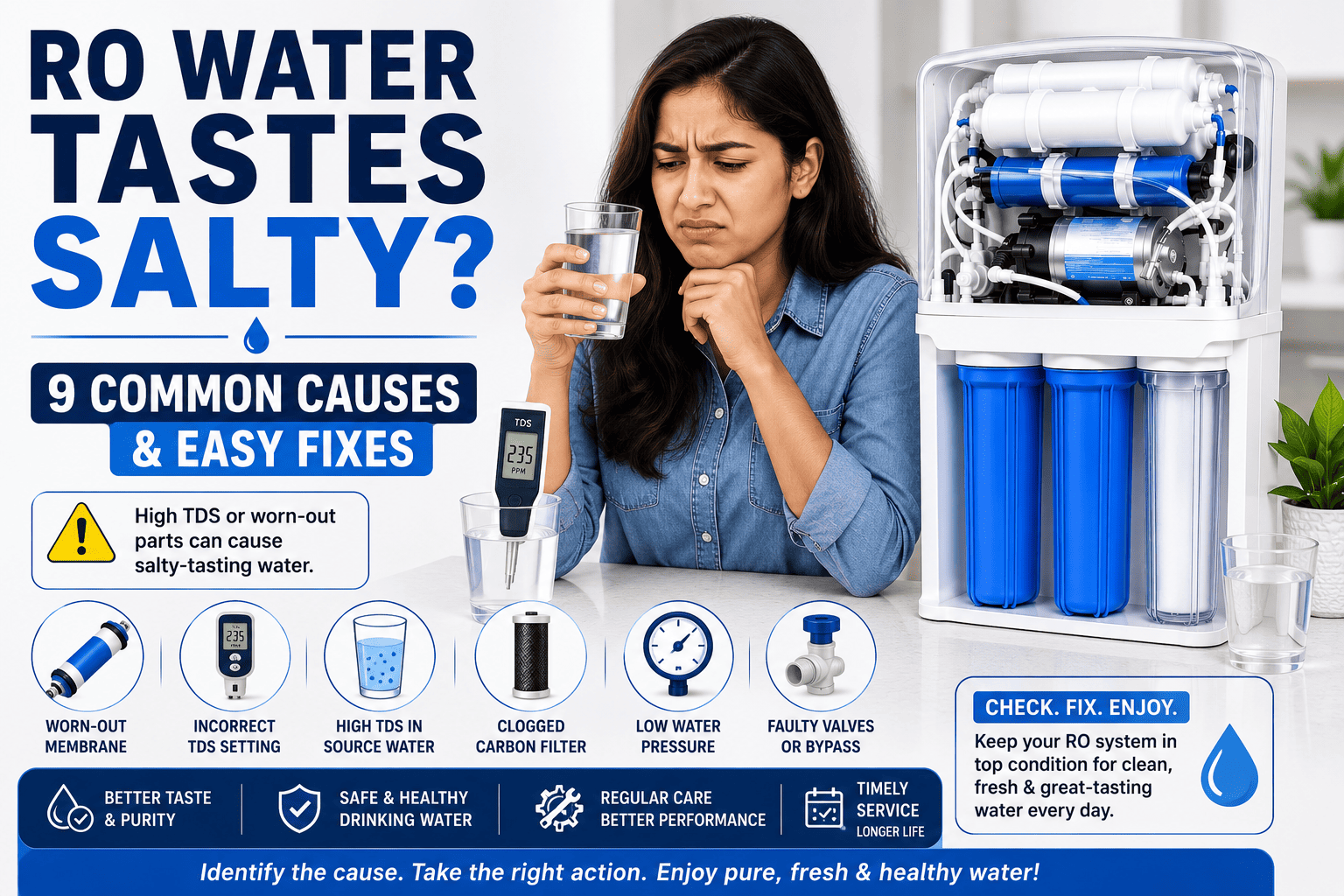
9 Common Causes of Salty RO Water
1. Worn-Out RO Membrane
The membrane is responsible for removing dissolved salts.
Symptoms
- Increased TDS
- Salty taste
- Slow purification
Solution
Replace the membrane if it has reached the end of its service life.
2. High TDS in Source Water
Groundwater and borewell water can experience seasonal changes that increase dissolved solids.
Solution
Measure the inlet TDS. If it’s significantly higher than usual, your purifier may require servicing or a higher-capacity membrane.
3. Incorrect TDS Controller Adjustment
If the TDS controller allows too much untreated water to mix with purified water, the output may taste salty.
Solution
Have the controller adjusted according to the purifier manufacturer’s specifications.
4. Clogged Carbon Filter
An expired carbon filter may not effectively improve taste and odor.
Solution
Replace the carbon filter at the recommended interval.
5. Membrane Installed Incorrectly
An improperly seated membrane can reduce purification efficiency.
Solution
Inspect the membrane housing and reinstall the membrane correctly.
6. Low Water Pressure
Insufficient pressure reduces membrane performance.
Solution
Check the inlet pressure and inspect the booster pump if your purifier uses one.
7. Bypass or Internal Valve Problem
A faulty valve may allow untreated water to mix with purified water.
Solution
Inspect the internal valves and replace defective components.
8. Old Storage Tank
Mineral deposits inside the storage tank can affect taste.
Solution
Clean and sanitize the tank during routine maintenance.
9. Poor-Quality Replacement Filters
Low-quality replacement filters may not perform to specification.
Solution
Use high-quality, compatible replacement filters and membranes.
Step-by-Step Troubleshooting
- Measure inlet and outlet TDS.
- Compare the readings.
- Check the filter replacement dates.
- Inspect the RO membrane.
- Verify the TDS controller setting.
- Check inlet water pressure.
- Flush the purifier if new filters were recently installed.
- Sanitize the storage tank.
- Test the water again.
How to Prevent Salty RO Water
- Replace filters on schedule.
- Change the membrane when recommended.
- Test TDS every few months.
- Service the purifier annually.
- Use quality replacement parts.
- Flush new filters before use.
Frequently Asked Questions
Why does my RO water suddenly taste salty?
Common reasons include a worn membrane, high inlet TDS, incorrect TDS controller settings, or a faulty internal valve.
Can I fix salty RO water myself?
You can check TDS, replace filters, and flush the system. Membrane or valve replacement may require technical assistance.
What is a good TDS level for RO water?
The ideal TDS depends on your source water and local conditions, but many domestic RO systems produce water in a moderate, palatable range while still effectively reducing contaminants.
When should I replace the RO membrane?
Typically every 2–3 years, though lifespan depends on water quality, usage, and maintenance.
Conclusion
Salty RO water is usually a sign that the purification process isn’t performing as expected. By checking the membrane, filters, TDS levels, and water pressure, you can identify the cause and restore clean, fresh-tasting drinking water. Regular maintenance and timely replacement of key components are the best ways to prevent this issue from recurring.


