





RO Water Tastes Bitter – Causes, Is It Safe & How to Fix It (2026 Guide)

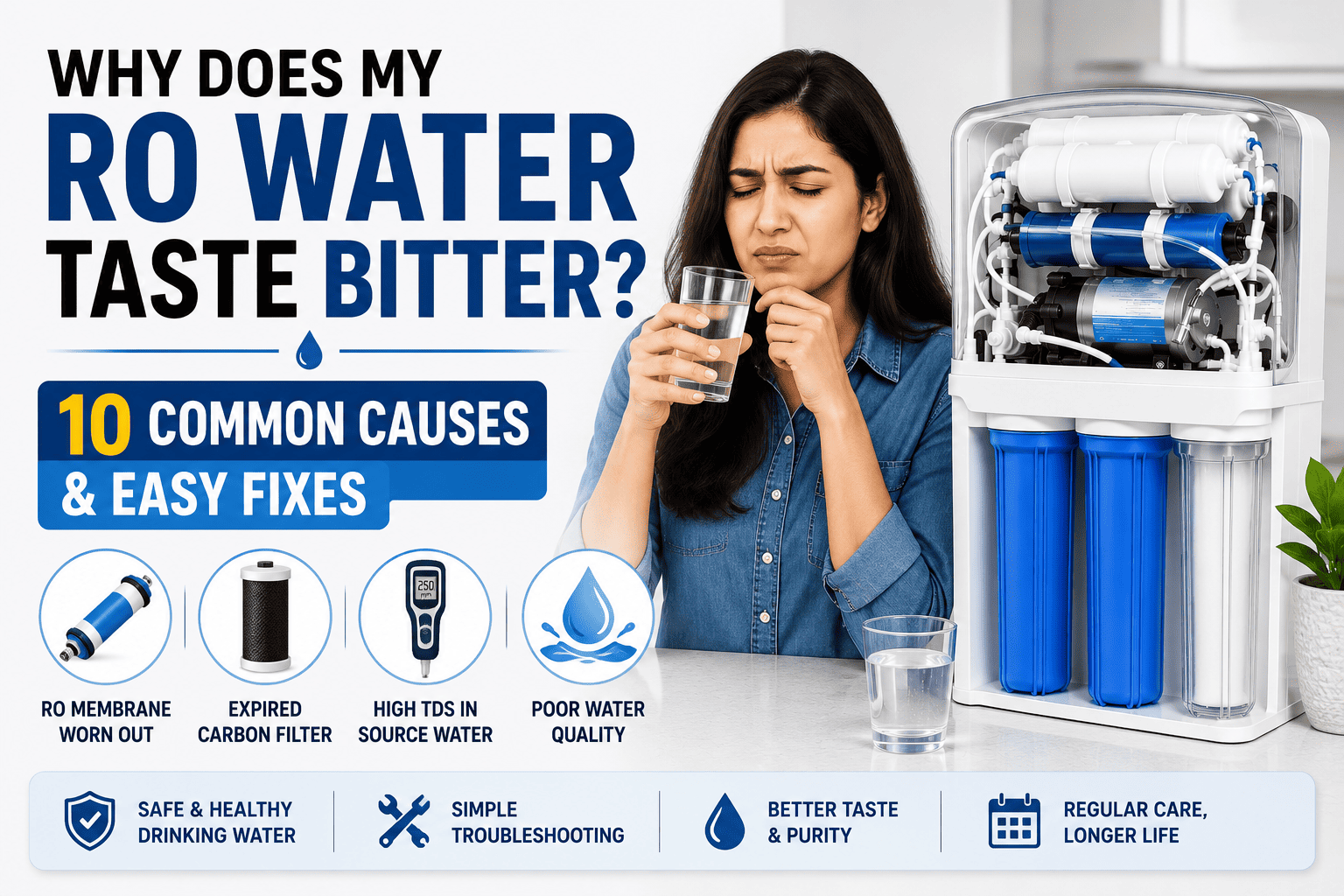
Why Does My RO Water Taste Bitter?
Reverse Osmosis (RO) systems are designed to produce clean, safe drinking water. If your RO water suddenly develops a bitter taste, it usually indicates a change in water quality, filtration performance, or the condition of one or more components inside the purifier.
In most cases, the problem can be resolved without replacing the entire purifier.
This guide explains the possible causes, how to diagnose the issue, and the best solutions.
Common Symptoms
- Bitter or unpleasant taste
- Metallic aftertaste
- Water tastes different than usual
- Bad taste after replacing filters
- Family members notice a change in flavor
- TDS reading seems unusually high or low
Is Bitter RO Water Safe to Drink?
A bitter taste doesn’t always mean the water is unsafe, but it does indicate that something has changed.
Possible reasons include:
- Worn-out RO membrane
- Expired carbon filter
- High TDS in incoming water
- Incorrect TDS controller settings
- Contamination inside the purifier
If the taste change is sudden, inspect the purifier before continuing regular use.
10 Common Causes of Bitter RO Water
1. Worn-Out RO Membrane
The membrane removes dissolved salts and impurities.
Symptoms
- Bitter taste
- Higher TDS
- Slow purification
Solution
Replace the membrane if it has reached the end of its service life.
2. Expired Carbon Filter
Carbon filters remove chlorine, odors, and unpleasant tastes.
Solution
Replace the carbon filter according to the recommended maintenance schedule.
3. High TDS in Source Water
Seasonal changes or municipal supply variations can increase inlet TDS.
Solution
Measure inlet and outlet TDS. If necessary, service the purifier or replace the membrane.
4. Incorrect TDS Controller Setting
An improperly adjusted TDS controller may allow excess minerals to mix with purified water.
Solution
Have the TDS controller adjusted according to the purifier manufacturer’s recommendations.
5. New Filters Need Flushing
Freshly installed filters often require flushing before normal use.
Solution
Discard the first few tanks of water after replacing filters.
6. Bacterial Growth
If the purifier has not been serviced regularly, bacteria may develop inside the storage tank or tubing.
Solution
Sanitize the purifier and replace overdue filters.
7. Contaminated Storage Tank
A dirty storage tank can affect the taste of drinking water.
Solution
Clean and disinfect the tank during routine servicing.
8. Low-Quality Replacement Filters
Poor-quality filters may not remove contaminants effectively.
Solution
Use high-quality, compatible replacement filters.
9. Water Has Been Sitting Too Long
Water stored in the tank for an extended period may taste stale.
Solution
Drain the tank completely and allow it to refill with fresh water.
10. Internal Component Wear
Old tubing, valves, or fittings can occasionally affect water quality.
Solution
Inspect aging components during annual maintenance.
Step-by-Step Troubleshooting
- Taste the water after flushing one full tank.
- Measure inlet and outlet TDS.
- Check the service history.
- Replace overdue filters.
- Inspect the RO membrane.
- Clean the storage tank.
- Sanitize the purifier.
- Test the water again.
How to Prevent Bitter-Tasting RO Water
- Replace filters on schedule.
- Change the RO membrane when required.
- Sanitize the purifier regularly.
- Flush new filters before use.
- Monitor TDS periodically.
- Use high-quality replacement parts.
Frequently Asked Questions
Why does my RO water suddenly taste bitter?
The most common causes are a worn membrane, clogged carbon filter, or changes in the incoming water quality.
Can a carbon filter affect the taste?
Yes. An expired carbon filter may no longer remove chlorine and taste-causing compounds effectively.
Should I stop drinking the water?
If the taste changes suddenly or seems unusual, inspect and service the purifier before continuing regular use.
How often should I test TDS?
Checking TDS every few months or after replacing major components is a good practice.
Conclusion
A bitter taste in RO water is usually a sign that the purifier needs maintenance rather than replacement. By checking the filters, membrane, TDS levels, and storage tank, you can identify the cause and restore clean, great-tasting drinking water.


